ONDA Lifting 50k, 80k, and 100k Shots: What Does Kilojoule (kJ) Mean, and How to Get Better Results?
ONDA Lifting 50k, 80k, and 100k Shots: What Does Kilojoule (kJ) Mean, and How to Get Better Results?
| From How ONDA Lifting Works to Kilojoule-Based Features, Pain Level, Treatment Interval, and Precautions
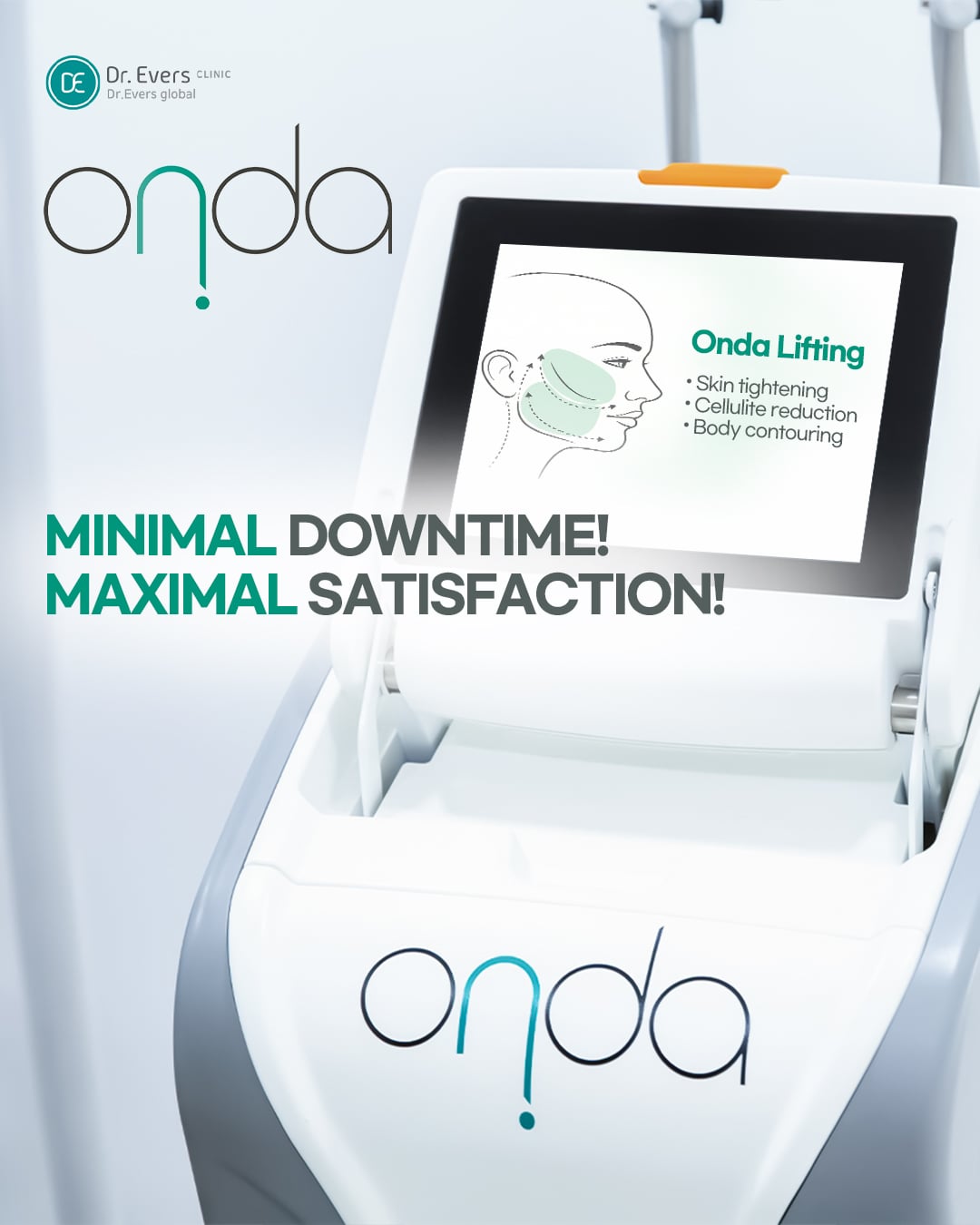
ONDA Lifting is a lifting treatment that uses microwave energy to deliver heat stimulation to the tissue beneath the skin. When the facial contour looks heavy or the under-chin line appears less defined, the treatment plan is made by assessing both skin elasticity and the condition of the fat layer.
In this article, we will review how ONDA Lifting works, the differences between 50k, 80k, and 100k shots, what kilojoules (kJ) mean, how to choose a lifting treatment, pain level, treatment intervals, and post-treatment precautions.
ONDA Lifting Key Preview
- How it works — ONDA Lifting delivers 2.45GHz energy to the tissue beneath the skin to induce a heat response
- What kilojoules mean — kJ refers to the amount of energy delivered; 50k shots can be understood as 50kJ, 80k shots as 80kJ, and 100k shots as 100kJ
- Choosing the energy amount — The number of shots is adjusted based on treatment area, fat layer, degree of elasticity loss, and pain sensitivity; higher is not always better
- Effect criteria — Improvements in facial contour, firmness, and skin texture may be felt at different times depending on individual tissue thickness and lifestyle habits
- Important point — For ONDA Lifting, it is important to first assess face shape, fat volume, and sagging direction before deciding the energy level and treatment area
1. How ONDA Lifting Works
ONDA Lifting uses a specialized microwave energy. Instead of strongly heating only the skin surface, it delivers thermal energy to the target tissue and evaluates the response of both the fat layer and the dermal layer.
The key factors are the total amount of energy and where it is delivered. kJ stands for kilojoule and indicates the amount of energy actually delivered to the skin. Even with the same 80k shots, the perceived effect can vary depending on face size, under-chin fat volume, and skin thickness.
3 Things to Check Before an ONDA Lifting Consultation
① Direction of sagging — The treatment area differs depending on whether the cheek fat is sagging downward or the under-chin fat is more prominent.
② Thickness of the fat layer — Thin and thick fat areas can respond differently and feel different levels of discomfort even with the same energy.
③ Skin sensitivity — If you have a history of facial redness, heat sensitivity, or dermatitis, the intensity and treatment interval may need to be adjusted.
2. ONDA Lifting 50k, 80k, and 100k Shot Effect Analysis
50k, 80k, and 100k shots refer to the total amount of energy delivered during the treatment. As the number increases, the energy amount increases, but the best choice should be determined by whether it suits your facial condition and target area.
| Category | Features | Consultation Checkpoint |
|---|---|---|
| 50k shots | An energy amount that is relatively suitable for light contour refinement or localized areas | First decide whether to focus on the cheeks, jawline, or double chin |
| 80k shots | A mid-range option often planned when assessing both the overall facial contour and under-chin area | Adjust the intensity by considering the fat layer, elasticity loss, and pain sensitivity |
| 100k shots | An energy amount that can be considered when the treatment area is wider or when designing a broader under-chin and cheek-line plan | If the skin is thin or sensitive to heat, a gradual approach is needed rather than excessive application |
| Kilojoule (kJ) | 1kJ equals 1,000J. 50k shots means 50kJ, 80k shots means 80kJ, and 100k shots means 100kJ | The number is only a measure of energy amount and does not independently guarantee results |
ONDA Lifting should not be judged by energy amount alone
ONDA Lifting is not simply about choosing between 50k, 80k, or 100k shots. It is important to assess face shape, fat layer, degree of sagging, and pain sensitivity before designing the treatment according to the necessary area.
3. BEST 4 Lifting Treatments
Lifting treatments differ in energy type and target skin layer. Rather than deciding that one treatment is better than another, the choice should be based on the cause of sagging and skin thickness.
ONDA Lifting
This treatment uses microwave energy to refine the jawline, cheeks, and double-chin area. It is often discussed during consultations when the fat layer is also a concern.
Thermage FLX
This treatment uses radiofrequency energy to address skin elasticity, fine wrinkles, and texture changes together. It may be considered when the skin looks thin or has lost firmness.
Ultherapy Prime
Ultherapy Prime is a lifting treatment that uses ultrasound energy to target deeper supportive layers. It is often considered for structural lifting concerns such as jawline sagging and cheek sagging.
XERF
XERF is a radiofrequency-based tightening treatment that may be selected when both elasticity loss and skin laxity are concerns. The plan is made by assessing overall facial elasticity balance.
“ONDA Lifting does not guarantee stronger effects just because the number of shots is higher. How the energy is distributed to the necessary areas matters more.”
— Skin thickness, fat layer, and sagging direction should be assessed together to create a more realistic treatment plan.
4. ONDA Lifting Pain Level, Treatment Interval, and Longevity
Treatment interval and longevity are influenced more by skin response and target area than by energy amount alone. ONDA Lifting should also be evaluated by looking at recovery status and contour changes rather than judging from a single treatment sensation.
| Category | General Guidance | Consultation Checkpoint |
|---|---|---|
| Treatment interval | It is often planned at intervals of around 3 to 4 weeks and adjusted depending on skin response | If heat sensation, swelling, or sensitivity lasts longer, it is better to leave more time before the next session |
| Recommended number of sessions | Depending on the condition, changes may be checked after one session, or two to three or more sessions may be planned at set intervals | The number of sessions is adjusted based on sagging level, fat layer, and schedules such as weddings or photoshoots |
| Longevity | It varies greatly by individual, and the perceived duration may differ depending on lifestyle habits and skin elasticity | In general, the condition is checked every few months while discussing maintenance care if needed |
| Pain level | You may feel warmth, a heavy heat sensation, or slight stinging depending on the area | Sensitive areas such as the under-chin area or around the cheekbones may require intensity and speed adjustment |
| Post-treatment response | Temporary redness, heat sensation, swelling, tenderness, and dryness may occur | Reduce heat stimulation and focus on moisturizing, sun protection, and adequate hydration |
After ONDA Lifting, heat sensation and swelling should be checked first.
The skin may become sensitive immediately after treatment. If redness or heat sensation remains, it is better to avoid activities that raise body heat, such as saunas, alcohol, and intense exercise.
5. Precautions After ONDA Lifting
Post-treatment care should focus on reducing heat stimulation and helping the skin recover calmly. Excessive touching or rubbing of swelling or redness right after treatment may prolong discomfort.
Lifestyle Care to Help Prevent Side Effects After ONDA Lifting
| Category | Main Features | Care Direction |
|---|---|---|
| Heat sensation immediately after treatment | Temporary redness, warmth, and swelling may occur | Follow medical guidance for cooling care, and do not press or rub strongly |
| Alcohol and sauna | Alcohol, sauna, and hot baths may increase heat sensation and swelling | Reduce irritation for 1 to 2 days, and avoid overdoing it if tenderness remains |
| Intense exercise and friction | Intense exercise, strong facial massage, and scrubs may increase skin irritation | Reduce irritation for 1 to 2 days, and avoid overdoing it if tenderness remains |
| Moisturizing and sun protection | Dryness and sensitivity may increase, so moisturizing and sun protection are needed | If redness, heat sensation, pain, or blister-like reactions last long, do not manage them on your own and contact the clinic |
After ONDA Lifting, reducing excessive irritation comes first
Redness and heat sensation may occur temporarily. However, alcohol, sauna, or strong facial massage immediately after treatment may prolong swelling or stinging, so it is better to proceed after the skin has stabilized.
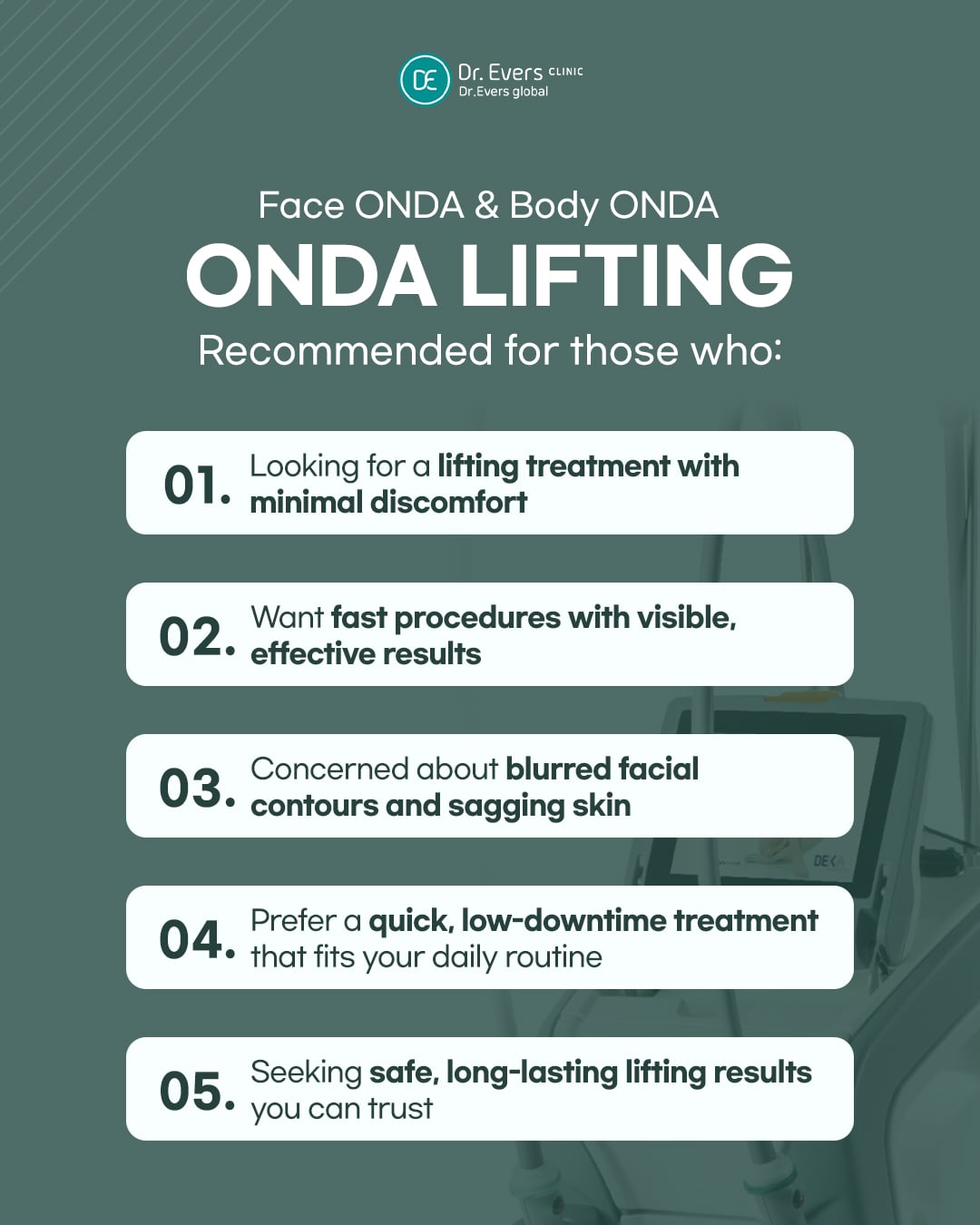
Check Your ONDA Lifting Plan
- You are curious about how to choose between 50k, 80k, and 100k shots
- Your under-chin, cheek, or deep cheek area looks heavy or less defined
- You want to check whether both fat layer and elasticity loss are present
- You are concerned about immediate reactions such as pain, swelling, and heat sensation
- You want to understand how ONDA differs from Thermage FLX, Ultherapy Prime, and XERF
If two or more apply to you, it may be helpful to create an ONDA Lifting plan after checking your face shape and skin condition.
6. ONDA Lifting FAQ: Frequently Asked Questions
Q1. What is the difference between ONDA Lifting 50k, 80k, and 100k shots?
These terms refer to differences in the total amount of energy delivered. 50k shots can be understood as 50kJ, 80k shots as 80kJ, and 100k shots as 100kJ, and it is important to choose based on your facial condition.
Q2. What exactly does kilojoule (kJ) mean?
kJ stands for kilojoule, a unit of energy. In ONDA Lifting, it is used to describe the amount of energy delivered during treatment, and the number alone does not determine the result.
Q3. How many ONDA Lifting sessions do I need?
There is no fixed number of sessions. Changes may be checked after one session, or two to three or more sessions may be planned depending on the degree of sagging and fat layer condition. Your goals and schedule are reviewed together during consultation.
Q4. How painful is ONDA Lifting?
It may feel like warm heat, a heavy pressure sensation, or slight stinging depending on the area. Areas near the under-chin or close to the bone may feel more sensitive, so intensity adjustment may be needed.
Q5. Can I return to daily life right after ONDA Lifting?
Most people can continue daily activities without major restrictions, but redness or swelling may occur. On the day of treatment, it is better to avoid activities that raise body heat, such as alcohol, sauna, and intense exercise.
Q6. What should I avoid after ONDA Lifting?
On the day of treatment, it is best to avoid sauna, hot baths, alcohol, intense exercise, strong facial massage, and scrubs. If heat sensation or pain lasts long, do not touch the area on your own and contact the medical team.
Dr.Evers Clinic is currently offering ONDA lifting promotion.
* Promotion period and benefits may change.
Book an Appointment at Dr.Evers Clinic
A nationwide dermatology clinic network with 34 branches across Korea
#ONDALifting #ONDALifting50k #ONDALifting80k #ONDALifting100k #Lifting
Conclusion: ONDA Lifting should be planned based on treatment design, not just the number of shots.
ONDA Lifting 50k, 80k, and 100k shots are categories used to describe the total amount of energy delivered. 50k shots can be understood as 50kJ, 80k shots as 80kJ, and 100k shots as 100kJ, but suitability cannot be determined by the number alone.
Perceived results, pain level, treatment interval, and longevity may vary depending on face shape, fat layer, skin thickness, and degree of elasticity loss.
Notice.
#. Skin thickness, fat layer, degree of sagging, redness, heat sensation, pain sensitivity, and longevity may vary by individual.
#. Rather than making a decision on your own after reading this article, it is recommended to consult with a medical professional and create an ONDA Lifting plan suited to your face shape and skin condition.
Recommended Articles
- Rejuran Healer vs. Rejuran HB Plus: Are the Ingredients, Pain Level, Treatment Interval, Longevity, and Effects Different?
- Pico Fraxel vs. Potenza for Acne Scars: Which Treatment Works Better?
- Can Lip Filler Create a Philtrum-Shortening Effect, and Is It Okay to Exercise After Lip Filler?
- Thermage FLX 300 Shots vs. 600 Shots: How Many Shots Are Right for Me, and How Is It Different from Ultherapy?