
Black Peel Benefits: The Secret to Managing Persistent Acne and Excess Sebum
| A Low-Irritation Guide to Smoother, Clearer Skin and Effective Blemish Care
Do you feel frustrated by recurring “acne and blackheads” even when you cleanse your skin carefully?
Even with expensive skincare products and diligent home care, small closed comedones and oily sebum can be difficult to manage on your own.
This is because the issue is not limited to the skin surface. Deep within the pores, ‘excess sebum’ and ‘accumulated dead skin cells’ that block the pores can occur together.
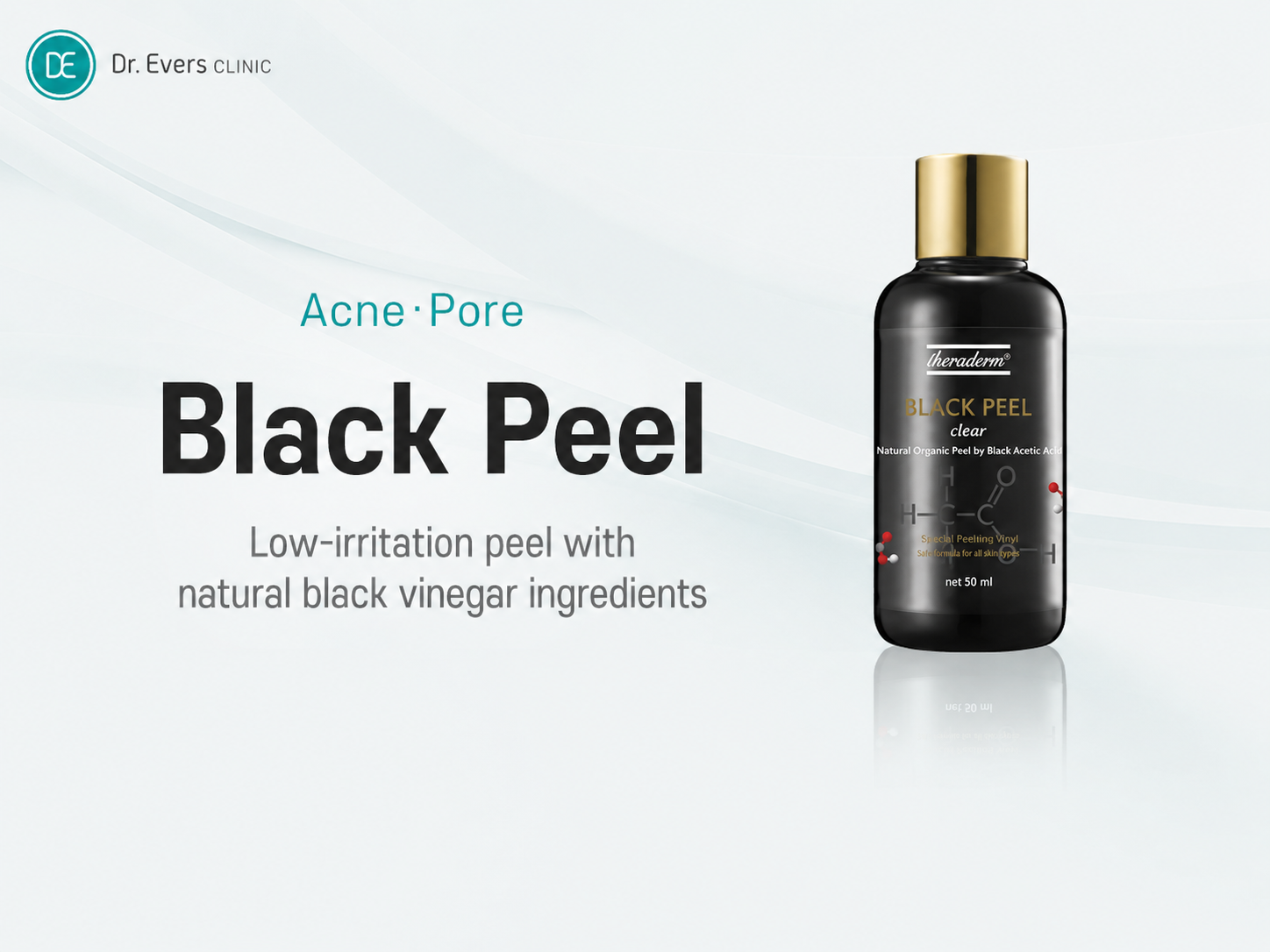
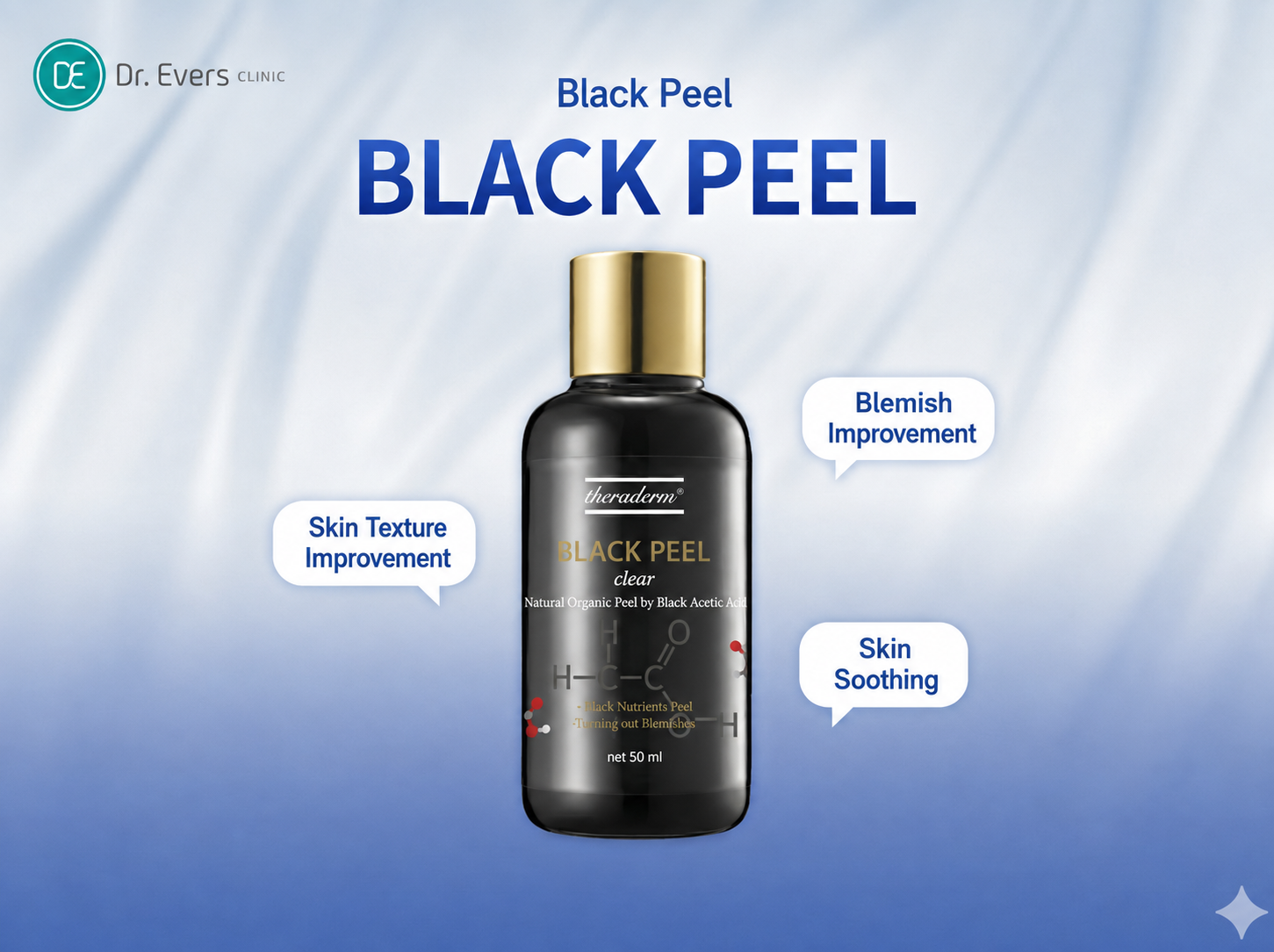
Black Peel, a naturally fermented black-vinegar-based treatment designed to address both concerns with minimal irritation, can help support the skin barrier while calming blemish-prone skin.
However, Black Peel results can vary greatly depending on how the application time and amount are adjusted for your individual skin condition.
In this article, we will explain “why customized Black Peel application for each skin type is so important, and what precautions to know before and after treatment”.

Black Peel: Key Takeaways
- Acne calming and sebum control together — the distinctive anti-inflammatory and antimicrobial properties of black vinegar
- Minimizing skin irritation — a low-irritation, naturally derived peel designed to address some limitations of conventional chemical peels
- For blemish-prone skin — adjust application time according to your skin thickness and sensitivity
- After Black Peel, avoid forcibly peeling off flaking skin or using scrubs
- Even with the same peeling solution, a physician’s assessment of your skin barrier condition can significantly affect the outcome
1. Persistent Breakouts: The Real Causes Are Excess Sebum and Accumulated Dead Skin Cells
If breakouts continue despite acne ointments and patches, it may be worth checking whether your pores are significantly clogged.
Hydration or soothing creams alone may not be enough to remove a thick buildup of dead skin cells that is already blocking the pores.
Black Peel is a fermented black-vinegar-based peel designed to gently loosen pore-clogging dead skin cells and help clear excess sebum, creating a less favorable environment for acne-associated bacteria.
Unlike conventional acid-only formulas, these naturally derived ingredients are described as providing amino acids and nutrients while helping remove accumulated dead skin cells,
supporting clearer-looking skin turnover while aiming to minimize excessive redness or irritation.
The key is determining how long the peeling solution should remain on the skin and when it should be neutralized. Customized application time and treatment planning based on skin thickness and the degree of inflammation are central to Black Peel treatment.
The most appropriate approach is to design a peeling plan based on the degree of facial inflammation and your individual skin sensitivity. Below, we explain why Black Peel treatment should be carefully adjusted.
3 Key Factors Behind Acne and Breakouts
① Excess Sebum Production — Stress, hormones, diet, and other factors can stimulate the sebaceous glands, leading to excess sebum that accumulates inside the pores.
② Follicular Keratinization (Clogging) — Dead skin cells that would normally shed can build up and block the pore opening, preventing sebum from flowing out normally.
③ Proliferation of Acne-Associated Bacteria (P. acnes) — A clogged, sebum-filled pore creates a low-oxygen environment in which acne-associated bacteria can proliferate, potentially contributing to inflammatory or pustular acne.
2. The Key to Black Peel: Naturally Fermented ‘Black Vinegar (Black Acetic Acid)’
Unlike conventional single-acid chemical peels such as AHA or BHA treatments, Black Peel is formulated around naturally derived organic acids from ‘black vinegar’ together with ingredients such as salicylic acid and jasmonic acid. Because it is intended to support controlled exfoliation rather than aggressively strip the skin surface, application should be carefully tailored to skin type and breakout pattern.
| Concern (Skin Issue) | Key Features (Possible Cause) | Treatment Goal (Approach) |
|---|---|---|
| Small Closed Comedones | Sebum becomes trapped near the surface because it cannot exit through the pore opening | Careful comedone extraction combined with removal of buildup around the pore opening |
| Red, Painful Inflammatory Acne | A pronounced inflammatory response associated with acne-related bacterial activity | Aim to calm inflammation and reduce acne-associated bacterial activity |
| Excess Sebum and Blackheads | Sebum oxidizes and darkens, while pores may appear progressively more enlarged | Help loosen and clear oxidized sebum from the pores |
| Sensitive, Dull-Looking Skin | Slower skin turnover can contribute to accumulated dead skin cells and uneven pigmentation | Support smoother texture and nourishment while minimizing disruption to the skin barrier |
Naturally Derived Black Vinegar Designed to Minimize Irritation
The amino acids and various organic acids in Black Peel are intended to help reduce excessive sensitivity during the exfoliation process. Rather than aggressively stripping the skin, the treatment is designed to loosen the bonds between accumulated dead skin cells and promote controlled shedding, supporting smoother-looking skin renewal.
3. Black Peel Combination Options for Your Skin
Black Peel Alone (Basic Skin Turnover Care)
This basic treatment is considered for mild acne, excess sebum, or an overall dull complexion. The naturally derived acids in Black Peel help loosen superficial dead skin cells that clog pores, leaving the skin feeling smoother and looking brighter.
Black Peel + Comedone Extraction (Focused Inflammatory Acne Care)
This combination is commonly considered when closed comedones are prominent or inflammatory acne is active. After comedones are carefully extracted under medical guidance, Black Peel is applied so that ingredients such as salicylic acid can reach the cleared pore openings and help reduce excess sebum, acne-associated bacterial activity, and inflammation.
Black Peel + Aqua Peel (Blackhead and Pore Cleansing)
This combination may be considered for excess sebum and visible blackheads around the nose. Aqua Peel first uses fluid flow and suction to remove debris and sebum from the pores, after which Black Peel is applied to support deeper pore cleansing, sebum control, and a refined pore appearance.
Black Peel + LDM (Hydration and Soothing Boost)
This combination is intended for skin that becomes dry easily after exfoliation or has a thin, sensitive barrier. After Black Peel, LDM ultrasound treatment is used with hydrating skincare to support moisture, soothe visible redness, and promote a smoother skin texture.
“A stronger peel is not automatically better. Careful application time and neutralization are important for calming inflammation while supporting the skin barrier.”
— A treatment plan designed by medical professionals who understand the skin condition can significantly influence the outcome.
4. Acne and Pore Treatment Comparison — How to Choose for Your Skin
Each skincare treatment has different goals and mechanisms. Use the table below as a general reference, and choose treatment after a medical professional evaluates your breakout pattern and the thickness of your accumulated dead skin cells.
| Treatment | Key Features (Suitable Concerns) | Treatment Goal (Mechanism) |
|---|---|---|
| Black Peel (Natural Black Vinegar Peel) | For concerns such as inflammatory acne, excess sebum, and a dull complexion | Helps loosen pore-clogging sebum and calm inflammation with minimal irritation |
| Aqua Peel (Pore Cleansing) | For superficial sebum buildup such as blackheads and whiteheads | Uses fluid flow, solutions, and suction to remove surface debris and pore buildup |
| Aladdin Peel (Spicule Peel) | For concerns such as thick dead skin buildup, acne marks, or back and chest acne | Uses micro-spicules to stimulate accelerated shedding of accumulated dead skin cells |
| LDM Ultrasound Treatment | For thin, dry, sensitive skin with noticeable redness | Uses high-density ultrasound to support the skin barrier and hydration |
Why Choosing the Right Peel for Your Skin Matters
If the skin is highly inflamed and sensitive, an aggressive physically stimulating treatment such as Aladdin Peel may worsen irritation. When inflammatory acne or excess sebum needs to be calmed, choosing a lower-irritation Black Peel or using Aqua Peel first to clear pore buildup may be more appropriate.
A stronger treatment is not always better. A customized approach that protects the skin barrier is important for reducing recurrent breakouts.
5. Before and After Treatment Precautions — Tips to Help Prevent Scarring
Why Treatment Timing Matters
Treatment is best considered before inflammation progresses deeper into the skin and contributes to scarring.
Closed comedones or early inflammatory breakouts may improve with Black Peel or professional extraction care. However, picking at lesions can lead to depressed scars or persistent red and dark marks, which may require additional treatments such as fractional laser or pigment-focused laser procedures.
Therefore, when breakouts begin to become a recurring concern, early pore cleansing and calming care can help support clearer skin and reduce the risk of acne marks and scars.
Essential Post-Treatment Care — Tips to Support Skin Barrier Recovery
| Care Item | Detailed Precautions | Goal (Why It Matters) |
|---|---|---|
| Do Not Pick or Peel Flaking Skin | Do not rub or peel off fine flaking that may appear 2–3 days after treatment | Allow natural shedding to help reduce irritation, redness, and post-inflammatory pigmentation |
| Hydration and Soothing Care | Reapply moisturizer and barrier-supporting cream whenever the skin feels dry | Helps prevent dryness during exfoliation and supports the skin barrier |
| Avoid Additional Exfoliation (Scrubs) | Avoid scrubs, peeling gels, pore packs, and other irritating products for at least one week | Helps prevent excessive irritation and damage to skin that has already undergone exfoliation |
| Sun Protection Outdoors | Apply sunscreen thoroughly before going outdoors and reapply after sweating | Helps protect newly exfoliated skin from UV-related dark spots and uneven pigmentation |
These Changes Can Be Part of the Normal Recovery Process
From about 2–3 days after Black Peel, fine white flaking may appear around areas with more sebum, such as the mouth or nose. This can occur as dead skin cells shed during the peeling process. Allow the flakes to come off naturally during gentle cleansing and focus on keeping the skin moisturized.
Check Your Current Skin Concerns
- My entire face becomes very oily by the afternoon even after cleansing
- Blackheads and whiteheads repeatedly appear around my nose and central face
- My skin feels bumpy and rough to the touch
- Red, painful inflammatory acne keeps recurring in certain areas
- I am concerned that stronger peeling treatments may cause pain or significant redness
If two or more apply, it may be a good time to consider a Black Peel consultation for lower-irritation acne and sebum care.
6. Practical FAQ: The Most Frequently Asked Questions in Clinic
Q1. Is Black Peel Painful?
Compared with stronger spicule-based treatments such as Aladdin Peel, Black Peel is generally associated with less discomfort. Depending on skin sensitivity, you may feel mild stinging or warmth while the solution is applied, which typically eases after neutralization. It is generally considered a relatively low-irritation peel.
Q2. Will It Affect Daily Activities? What About Cleansing and Makeup?
Mild redness may appear immediately after treatment and often settles within several hours. Gentle cleansing and light makeup may be possible on the same day depending on your skin response, but avoid rubbing or friction. Many people can return to normal daily activities relatively quickly.
Q3. When Can I Expect to Notice Black Peel Results?
Because surface buildup is gently exfoliated, the skin may feel smoother soon after treatment. Red inflammatory lesions may gradually appear calmer over the following several days. With an appropriate treatment plan, ongoing care may also help support more balanced sebum and a clearer-looking complexion.
Q4. Can Sensitive Skin Receive Black Peel?
Black Peel combines exfoliating acids such as AHA/BHA with amino-acid-containing ingredients and is designed as a lower-irritation treatment. Sensitive skin may be suitable in some cases, but if the skin barrier is severely compromised or there is active inflammatory dermatitis, a medical evaluation is important and soothing care such as LDM may be considered first.
Q5. How Many Black Peel Sessions Are Recommended?
The number of sessions varies according to skin thickness and the severity of breakouts. A series of treatments may be recommended at intervals determined by the medical team. Even one session may improve surface texture and brightness, while ongoing treatment may be considered for recurring sebum and acne concerns.
Q6. Can Black Peel Be Combined With Aqua Peel?
Black Peel and Aqua Peel can be used as a complementary combination. Aqua Peel first removes surface buildup, sebum, and blackheads with fluid-based suction, and Black Peel is then applied to support pore cleansing, sebum control, and calming care.
Dr.Evers Clinic is currently offering Black Peel promotions.
* Promotion dates and benefits are subject to change.
Book an Appointment at Dr.Evers Clinic
Dr.Evers Clinic Network with 32 Locations Across South Korea
#BlackPeel #AcneTreatment #SebumCare #AcneExtraction #DrEvers
Conclusion: For Clearer, Smoother Skin, the Right Solution for Your Skin Matters
If recurring red breakouts and bumpy sebum buildup are frustrating every time you look in the mirror, carefully removing accumulated dead skin cells may help improve the appearance of the skin. However, when inflammation is more severe, treatment should focus not simply on stronger exfoliation but on choosing an approach that respects the skin barrier and overall skin condition.
The key is not to choose the strongest peel, but to assess skin thickness and breakout patterns accurately and design the application time and combination care to minimize unnecessary irritation.
Important Notice.
#. Results and recovery may vary from person to person.
#. This article should not be used for self-diagnosis. A diagnosis and treatment plan should be determined after consultation with a qualified medical professional.
Recommended Articles
- Pigmentation Laser Picosure and Picotoning Effects: What Is the Difference, and Are They Different from Fraxel?
- XERF Lifting vs. Thermage: Differences, Longevity, Pain Level, and Treatment Planning
- Salivary Gland Botox vs Masseter Botox: What’s the Difference? How to Manage Bad Breath After Salivary Gland Botox
- Underarm Shadow Removal: Laser Hair Removal vs. Waxing vs. Shaving and How the Results Differ