
Ultherapy Prime vs. Ultherapy: What Are the Differences in Effects?
| If You Are Considering a Lifting Treatment, Start by Understanding the Differences Between the Two
One of the questions we hear most often in the clinic is, “Is Ultherapy Prime different from Ultherapy?”
Because the names are similar, many people assume they are the same treatment, while others find it difficult to decide which option may be more suitable.
This article explains the differences in how the two treatments work, what has been upgraded, and the key points to know before and after treatment.
Ultherapy Prime Key Takeaways
- Ultherapy Prime is an advanced lifting treatment based on high-intensity focused ultrasound (HIFU). Compared with conventional Ultherapy, key differences include real-time ultrasound visualization and a three-level dedicated transducer system.
- Energy can be delivered to the SMAS layer to support lifting and skin firmness, with treatment designed to reduce discomfort and irritation compared with the previous generation.
- Cleansing and makeup are possible immediately after treatment, and although results vary by individual, changes generally begin to appear gradually after about 1–2 months.
- It may be suitable for those concerned about a sagging jawline or double chin, those seeking natural-looking lifting without surgery, or those looking for an upgraded alternative to conventional Ultherapy.
1. How Ultherapy Prime Works
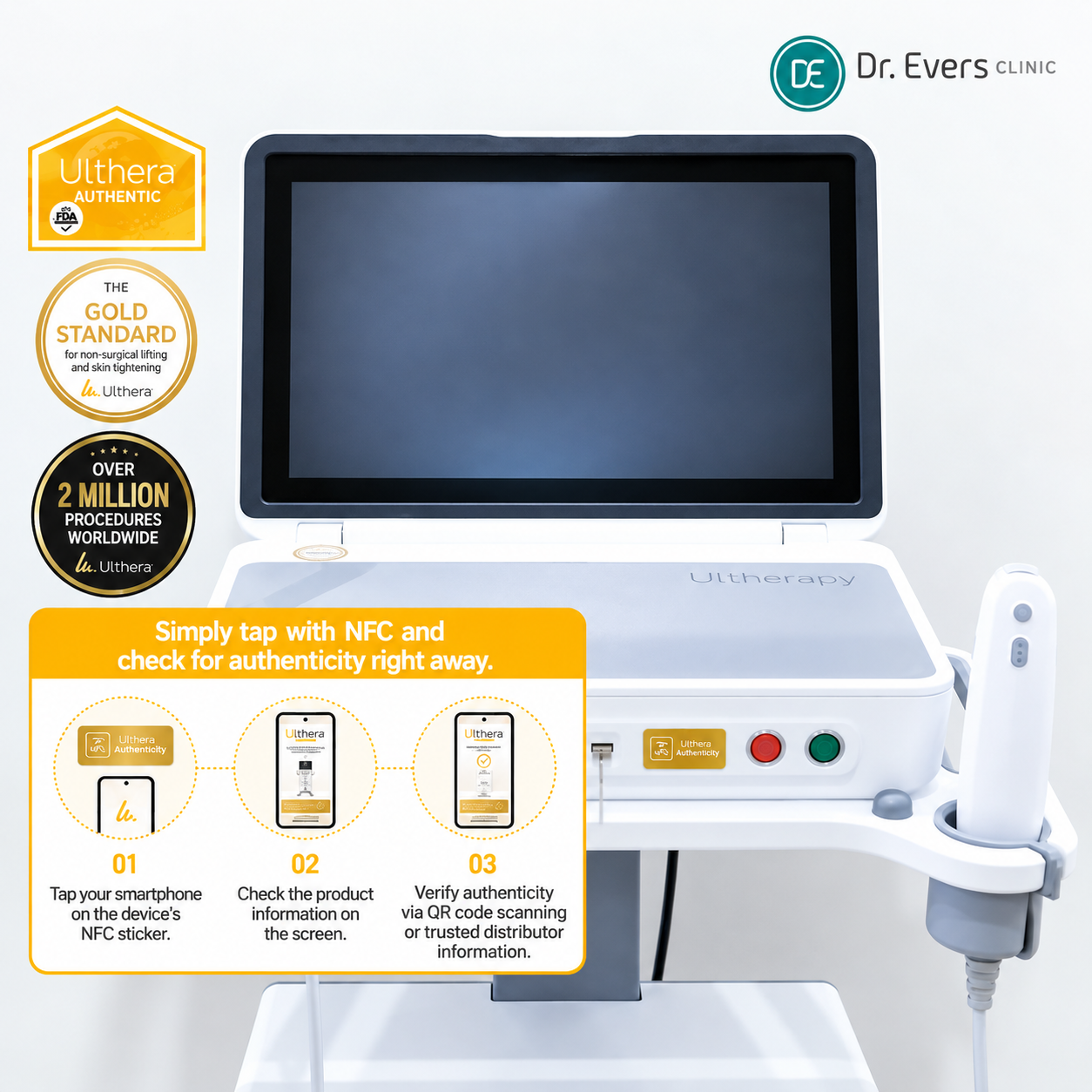
Ultherapy Prime works by delivering high-intensity focused ultrasound energy (HIFU PRIME) to specific depths beneath the skin surface.
Thermal coagulation points (TCPs) are created where the energy is delivered, helping stimulate collagen remodeling.
Because the energy is focused beneath the skin without directly affecting the surface, downtime is generally minimal.
Because new collagen formation takes time, results generally become visible gradually over about 1–2 months after treatment.
What Is Collagen?
Collagen is a protein that helps maintain skin firmness and naturally decreases with age.
2. Key Differences Between Ultherapy and Ultherapy Prime
Both treatments are HIFU-based lifting procedures, but there are technical differences between them.
While Ultherapy delivers energy at predetermined depths, Ultherapy Prime allows the practitioner to view skin structures in real time with ultrasound and adjust energy delivery more precisely for each area.
Ultherapy Prime also incorporates newer technology designed to reduce treatment-related discomfort and irritation compared with the previous version.
The overall concept remains the same—delivering energy to deeper tissue without directly treating the skin surface—but Ultherapy Prime can be understood as an upgraded version in terms of precision and comfort.
| Item | Ultherapy | Ultherapy Prime |
|---|---|---|
| Technology | HIFU | HIFU PRIME |
| Energy Delivery Method | Fixed-Depth Energy Delivery | Precision Delivery Tailored to Facial Structure |
| Real-Time Visualization | Limited | Real-time ultrasound visualization available during treatment |
| Treatment-Related Discomfort | Conventional Level | Designed to Reduce Discomfort and Irritation with Updated Technology |
| Use on Sensitive Skin | Relatively Limited | May Be Possible |
3. Ultherapy Prime: Three Dedicated Transducers
Ultherapy Prime uses three dedicated transducers for different treatment depths.
The three transducers are DS 10 (1.5 mm depth), DS 7 (3.0 mm depth), and DS 4 (4.5 mm depth), allowing energy to be delivered at multiple tissue levels from superficial layers to the SMAS.
This configuration allows a multi-depth lifting approach that addresses both superficial and deeper tissue layers.
A key feature is the ability to target different tissue layers more precisely than with a single-depth approach.
| Transducer | Energy Delivery Depth | Main Target Layer |
|---|---|---|
| DS 10 | 1.5mm | Superficial Skin and Upper Dermis |
| DS 7 | 3.0mm | Lower Dermis |
| DS 4 | 4.5mm | SMAS Layer |
What Is the SMAS Layer?
The SMAS is a fibrous layer beneath the facial skin that connects the skin with underlying muscle structures.
4. Who May Be Suitable for Ultherapy Prime
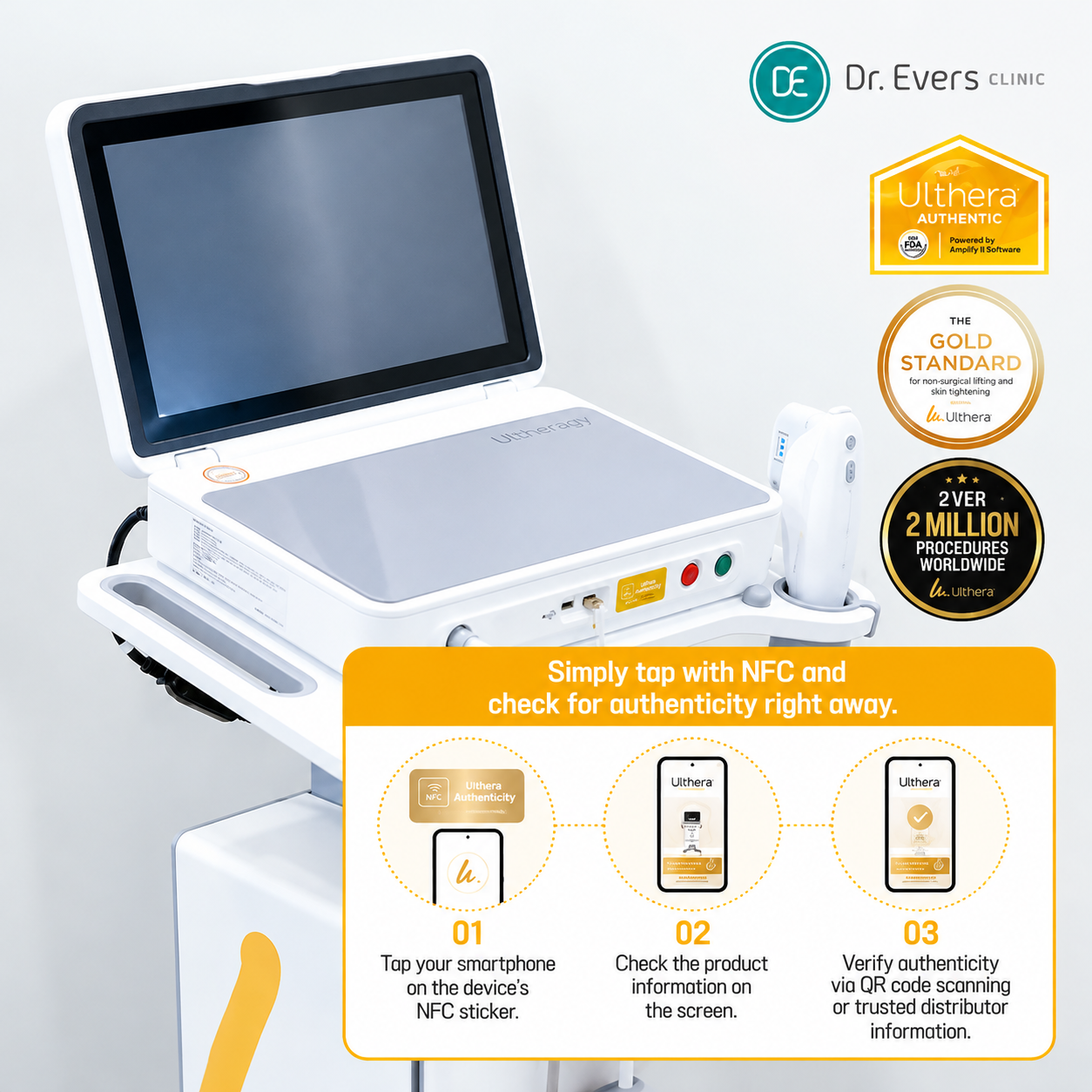
Ultherapy Prime may be considered for those concerned about a sagging jawline or double chin, or those seeking natural-looking lifting without incisions.
It may also be suitable for those seeking relatively long-lasting results from a single treatment or those who have previously had Ultherapy and want a more updated treatment option.
Because cleansing and makeup are possible immediately after treatment, it can fit relatively easily into a busy schedule.
However, skin condition and treatment goals vary by individual, so a thorough consultation is recommended to determine suitability before treatment.
| Suitable Candidates | Expected Benefits | Expected Duration |
|---|---|---|
| Sagging Jawline · Double Chin Concerns | Jawline Lifting · Improved Firmness | Approximately 6 Months to 1 Year |
| Seeking Natural-Looking Nonsurgical Lifting | Collagen Remodeling · Wrinkle Improvement | Approximately 6 Months to 1 Year |
| Seeking an Upgrade from Conventional Ultherapy | More Precise Energy Delivery · Reduced Discomfort | Approximately 6 Months to 1 Year |
5. Post-Treatment Precautions
Cleansing and makeup are possible immediately after Ultherapy Prime, but lukewarm water is recommended for cleansing during the first 3 days after treatment.
For about one week after treatment, it is recommended to avoid saunas, alcohol, peeling treatments, and scrub products.
Consistent use of sunscreen and moisturizer remains important after treatment.
Temporary redness or swelling may occur depending on skin condition and generally subsides over time.
Check Point: Because the skin may be more sensitive after treatment, apply sunscreen thoroughly before going outdoors.
6. Ultherapy Prime FAQ: Frequently Asked Questions
Q. When Can I Expect to Notice Results from Ultherapy Prime?
Rather than producing an immediate final result, lifting effects generally appear gradually over about 1–2 months as collagen remodeling progresses.
The time required for results to fully develop can vary depending on individual skin condition.
Q. How Often Should Ultherapy Prime Be Performed?
Results are generally described as lasting approximately 6 months to 1 year.
The timing of repeat treatment can vary depending on skin condition and the rate of aging, so it is recommended to determine the interval through consultation.
Q. Can I Have Ultherapy Prime If I Have Previously Had Ultherapy?
Ultherapy Prime may be performed even if you have previously received Ultherapy.
Treatment suitability and timing are determined after reviewing your previous treatment history and current skin condition.
Q. Can Ultherapy Prime Be Performed on Sensitive Skin?
Ultherapy Prime incorporates updated technology designed to reduce treatment-related irritation and discomfort compared with the previous generation, and it may be suitable for some people with sensitive skin.
However, suitability depends on the individual skin condition, so a consultation is necessary beforehand.
Q. Can I Wear Makeup on the Day of Treatment?
Cleansing and makeup are possible immediately after treatment.
However, lukewarm water is recommended for cleansing during the first 3 days, and strongly irritating products or scrubs should be avoided for about one week.
Q. How Uncomfortable Is Ultherapy Prime During Treatment?
Sensitivity varies from person to person, so the level of discomfort cannot be described the same way for everyone.
However, it is designed to reduce irritation compared with conventional Ultherapy and may feel relatively more manageable for those who were previously concerned about discomfort.
Dr.Evers Clinic is currently offering Ultherapy Prime promotions.
* Promotion dates and benefits are subject to change.
Book an Appointment at Dr.Evers Clinic
Dr.Evers Clinic Network with 30+ Branches Across South Korea
#UltherapyPrime #Ultherapy #HIFU #Lifting #SkinFirmness #DrEvers
Conclusion
Ultherapy Prime is based on the same core principle as conventional Ultherapy, while adding real-time ultrasound visualization, a three-level transducer system, and design improvements aimed at reducing discomfort. Results may vary depending on individual skin condition, so it is important to confirm whether the treatment is suitable for you through a thorough consultation before proceeding. If you have questions about the procedure, please visit the clinic for consultation.
References
1. Lim J, Siew TW, Xu Y. (2025). Early Experience With Ultherapy Prime in Asia Pacific: A Pilot Case Series. Plastic and reconstructive surgery. Global open.
https://doi.org/10.1097/gox.0000000000007269
2. Soza GM. (2026). Microfocused Ultrasound with Visualization for Skin Tightening: Clinical Applications, Safety, and Technical Considerations. Dermatologic clinics.
https://doi.org/10.1016/j.det.2026.02.007
3. Kumar N, de Almeida GOO, Chen CM, Carruthers JDA. (2026). High-Intensity Focused Ultrasound for Facial Rejuvenation and Body Contouring: A Bibliometric Analysis of Efficacy and Safety Studies. Aesthetic surgery journal. Open forum.
https://doi.org/10.1093/asjof/ojag008
4. Dicker V, Acevedo A, Parra A, Cabrales J, Velasquez L, Rojas C, Parra L. (2026). Evidence‐Based Management Recommendations for Microfocused Ultrasound With Visualization (MFU‐V) Complications: A Multidisciplinary Consensus and Clinical Validation. Journal of cosmetic dermatology.
https://europepmc.org/article/PMC/PMC13376685
This article was prepared based on in-clinic clinical information and the references listed above. Treatment suitability and results may vary depending on individual constitution, lifestyle habits, and skin condition. Please consult a medical professional for an accurate assessment.
Please Note.
#. Individual results may vary.
#. Please do not self-diagnose based on this article. We recommend receiving a medical consultation before establishing a diagnosis and treatment plan.