

How Does Rejuran S Work on Atrophic Acne Scars? Benefits for Depressed Scar Improvement
How Does Rejuran S Work on Atrophic Acne Scars? Benefits for Depressed Scar Improvement
| A Complete Guide to Rejuran S: Causes of Atrophic Scars, Benefits, Pain, Treatment Interval, Longevity, and Aftercare
If the skin surface appears sunken even after acne has subsided, it may be a depressed scar, different from a simple red mark. If dermal tissue is damaged during the inflammatory process and the collagen structure does not recover sufficiently, uneven skin elevation may remain. In such cases,
it is necessary to examine “how Rejuran S is applied to depressed scars”.
Rejuran S is an injectable treatment that delivers polynucleotide (PN) directly into scar tissue to support skin repair and remodeling in depressed areas. The treatment method and number of sessions required may vary depending on the scar type and depth.
Rejuran-S Key Preview
- The Key to Scars — If dermal tissue is damaged by inflammation and collagen is not sufficiently replenished during the recovery process, depressions may remain.
- Rejuran S Method — PN is injected directly into depressed scars to support skin repair and tissue remodeling.
- Expected Changes — The goal is to soften scar boundaries and skin texture so that indented marks appear less prominent.
- Treatment Reactions — Discomfort may occur during injection, while temporary redness, swelling, bruising, and small raised bumps may appear immediately afterward.
- Points to Check Before Procedure — We check the shape and depth of the scar, the presence of active acne, skin condition, and history of other scar treatments.
1. Why Do Depressed Acne Scars Form?
If acne inflammation progresses deeply, the dermal tissue and collagen structure surrounding the hair follicle can be damaged. Subsequently, during the wound healing process, if the tissue does not fill sufficiently back to its original height or adheres to the underlying tissue, the skin may remain in a sunken form.
Depressed scars are not all the same in shape and depth. They differ in form, such as the relatively gently sunken rolling type, the boxcar type with distinct boundaries, and the narrow, deep icepick type; multiple types can also be mixed on the same face. Therefore, it is important to approach treatment by distinguishing between the scar shape and the degree of adhesion.
3 Key Points to Understanding the Process of Depressed Scars
① Deep Inflammation — If acne inflammation affects the dermis, normal collagen structures can be damaged.
② Incomplete Remodeling — If damaged tissue is not sufficiently filled during the recovery process, a depression lower than the surrounding skin may remain.
③ Differences in Scar Shape — Depending on depth, boundaries, and the presence of adhesion, the appearance varies into rolling, boxcar, or icepick types.
2. Analysis of Rejuran S Effects, Advantages, and Features
Rejuran S delivers PN directly into atrophic scars to support skin repair and tissue remodeling. Depending on the scar type and depth, it may be performed alone or combined with other acne scar treatments.
| Items | Key Features | Checkpoints |
|---|---|---|
| Depressed Scars | It is applied by directly injecting PN components into the sunken area to consider the recovery and remodeling of the skin tissue surrounding the scar. | For deeply adhered scars or very narrow and deep scars, changes may be limited with injection procedures alone, so the scar type is classified first. |
| Skin Texture | During the process of alleviating the height difference of the depressed area, rough and uneven-looking skin texture can also be examined. | If the cause of pores or surface irregularities differs from that of the depressed scar, a separate treatment approach may be required. |
| Local Application | It can be applied by precisely injecting the necessary amount centered on the scarred area. | The injection site and depth may vary depending on the shape of the scar, skin thickness, and degree of adhesion. |
| Recovery Characteristics | Temporary small raised bumps, redness, swelling, bruising, and tenderness may appear immediately after the injections. | If abnormal reactions such as severe pain, heat sensation, gradually increasing swelling, or pus occur, you must consult the treatment institution. |
※ The response and degree of change to Rejuran-S may vary depending on the shape and depth of the scar, skin condition, injection area, and whether concurrent treatments are performed.
Rejuran-S is not a procedure that fills all depressed scars in the same way.
Depressed scars differ in depth and degree of adhesion. Since the required approach may differ between relatively shallow scars and deeply pulled scars, it is important to determine the application area by classifying the scar shape rather than simply increasing the injection volume.
3. BEST 4 Acne Scar Treatments
The methods for treating pitted acne scars cannot be explained by a single principle. Since the modes of action differ—such as PN injection, injections considering collagen regeneration, microneedle radiofrequency, and fractional lasers—the selection criteria vary depending on the scar depth and skin condition.
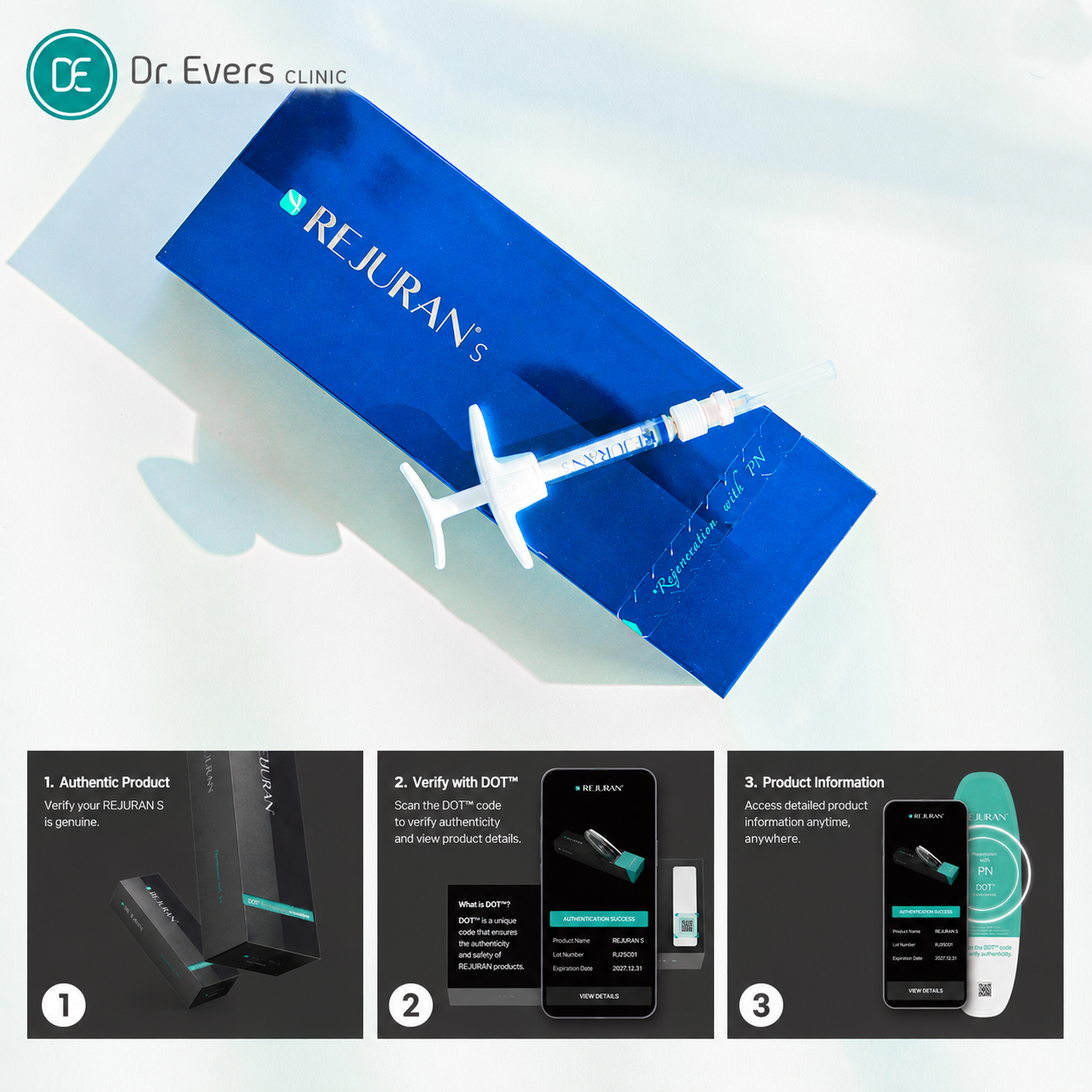
Rejuran S
This is a method of injecting PN components into the depressed scar area. It is applied when considering both the skin tissue recovery environment of the pitted mark and the skin texture, and the treatment plan varies depending on the depth of the scar and the degree of adhesion.
Juvelook
This is an injection procedure using PDLLA and hyaluronic acid components, utilized for managing acne scars and skin texture by considering the skin’s collagen regeneration. The injection layer and volume vary depending on the purpose of the treatment.
Potenza
This is a method that delivers radio frequency (RF) energy after inserting microneedles into the skin. When treating scars, pores, and skin texture, the tip type, needle depth, and energy settings are adjusted according to the skin condition.
Fraxel
This is a fractional laser method that creates microscopic treatment zones on the skin. It aims to improve acne scars and skin texture through a process of damage and recovery, and the penetration depth and recovery period vary depending on the type of laser.
“For depressed scars, the treatment direction is determined after distinguishing their shape and depth.”
— Even for the same acne scar, the presence of adhesion and the degree of indentation differ, so the principle of the procedure and the scope of application must be examined together.
4. Rejuran-S Pain, Frequency, Duration, and Number of Treatments
Rejuran S You may feel stinging and tenderness during the process of injecting multiple times into the scar area. The interval and number of repeated treatments are adjusted according to the degree of depression, recovery response, and concurrent treatment plan.
| Items | Key Features | Checkpoints |
|---|---|---|
| Pain | You may feel a stinging sensation when the needle enters and a dull pressure during injection. The perception of pain varies depending on the treatment site and individual sensitivity. | If pain is abnormally severe or worsens after the procedure, do not dismiss it as mere injection irritation; check the condition. |
| Recommended Frequency | Repeat treatments can generally be planned at intervals of several weeks, but the exact interval is determined based on the condition of the scar and the speed of skin recovery. | Adjust the next treatment schedule after confirming that swelling, bruising, or tenderness has sufficiently subsided. |
| Duration of Maintenance | It is difficult to uniformly determine the duration for which the improved condition is maintained. It varies depending on scar depth, the degree of skin remodeling, the occurrence of additional acne, and concurrent treatments. | Rather than viewing the maintenance period as a fixed number of months, you must also examine skin changes and the occurrence of new inflammation after the treatment ends. |
| Recommended Number of Treatments | In some cases, multiple repeated treatments are planned, and the required number of sessions depends on the number and depth of depressed scars and the degree of response. | Rather than applying the same number of sessions from the beginning, the need for additional treatment is determined by monitoring changes with each session. |
※ The pain, treatment interval, duration of maintenance, and number of Rejuran-S treatments may vary depending on the shape and depth of the scar, skin condition, injection area, and concurrent procedures.
Repeated Rejuran-S treatments monitor both scar changes and skin recovery.
Small raised bumps, swelling, or bruising may remain immediately after treatment. Rather than scheduling the next session automatically, the treatment interval should be determined after confirming that the skin has stabilized and evaluating how the scars have responded.
Therefore, it is important to monitor the response after each session and adjust the treatment interval and number of additional sessions accordingly.
5. Rejuran S Aftercare
Injection marks, redness, small raised bumps, swelling, or bruising may occur immediately after Rejuran S. These reactions usually subside over time. However, contact the clinic if pain or warmth worsens or if unusual symptoms such as discharge or severe swelling develop.
Gentle Skin Care Immediately After Rejuran S
Do not press hard or rub the treatment area.
Avoid strong massage and scrubbing while the injection site is swollen and sensitive. It is best to initially reduce activities that can increase heat or swelling, such as saunas, jjimjilbang, strenuous exercise, and drinking alcohol.
Follow the timing and method of washing your face and applying makeup as instructed by the treatment provider, and maintain UV protection when going out. Do not touch the injection marks with your hands or press them out arbitrarily.
Rejuran S aftercare focuses on avoiding unnecessary pressure, contamination, and heat exposure at the injection sites. Monitor your skin while swelling and bruising subside, and follow the aftercare instructions provided by the clinic.
| Items | Key Features | Checkpoints |
|---|---|---|
| Pressure / Friction | Avoid pressing, rubbing, or massaging the treatment area during the initial recovery period. | Even if small raised bumps or swelling are visible, do not repeatedly touch, press, or attempt to flatten the treated area. |
| Heat / Exercise |
It is recommended to avoid activities that increase body temperature and skin sensation, such as saunas, steam rooms, and strenuous exercise, immediately after the procedure. | Return to your usual activities as you watch the swelling and heat subside quickly. |
| Face wash and makeup | Follow the instructions of the treatment provider for washing your face and makeup, and do not rub the injection site vigorously, even after permitted. | Reduce the use of harsh scrubs or exfoliating products while your skin is sensitive. |
| Adverse reactions | Temporary redness, bruising, and swelling may appear, but severe pain, persistent heat, pus, and severe swelling require confirmation. | If your symptoms worsen or last longer than expected, contact your provider to check on your condition. |
※ Skin reactions after Rejuran S may vary depending on the injection site and extent, skin sensitivity, scar condition and individual recovery speed.
Contact the Clinic Immediately if Pain, Warmth, or Discharge Worsens
Mild swelling, bruising, and tenderness may occur after an injectable treatment. However, worsening pain or warmth, pus-like discharge, or pronounced swelling should be evaluated separately from the normal recovery process.
Rejuran S Recovery Checklist at Home
- Check whether the injection marks, redness, swelling, and bruising are gradually decreasing.
- Do not press or repeatedly touch the treatment area with your hands.
- In the early stages, avoid activities that increase heat, such as saunas, steam rooms, and vigorous exercise
- Reduces strong friction when washing face and applying makeup and maintains UV protection when going out
- Contact the clinic if you experience worsening pain or warmth, pus-like discharge, or severe swelling.
Recovery time after Rejuran S varies depending on the treatment area and skin condition. Avoid irritating the treated area, monitor it carefully, and contact the clinic if unusual pain or skin changes persist.
6. Rejuran S FAQ, Frequently Asked Questions
Q1. What Types of Atrophic Scars Can Be Treated With Rejuran S?
Rejuran-S can be applied by injecting PN ingredients into the pitted acne scar area. However, like the rolling type, boxcar type, and ice pick type, the scar shape is different and the degree of adhesion is different, so the actual application range is determined by checking the scar condition.
Q2. Is Rejuran S a procedure that directly fills scars like filler?
filler. This is a method that considers the recovery environment of skin tissue by injecting PN ingredients into the scar area, and changes may vary depending on skin reaction and treatment process.
Q3. How much is Rejuran S Pain?
You may feel tingling and tenderness as the needle is injected into the scar area several times. The degree of pain varies depending on the scope of the procedure and individual sensitivity, and pain control methods can be applied as needed.
Q4. Can Small Raised Bumps or Bruising Occur After Rejuran S?
Temporary small raised bumps, redness, swelling, or bruising may appear at the injection sites. Recovery time varies by individual. Contact the clinic if symptoms worsen or are accompanied by increasing pain or warmth.
Q5. How many times should I receive Rejuran S?
It is difficult to pinpoint the number of times required. The number of repetitions is determined by checking the depth and number of depressed scars, degree of adhesion, response to each session, and concurrent treatment.
Dr.Evers Clinic is currently offering Rejuran S promotions.
* Promotion dates and benefits are subject to change.
Book an Appointment at Dr.Evers Clinic
Dr.Evers Clinic Network with 30+ Locations Across South Korea
#RejuranS #RejuranSeffect #DepressedScars #AcneScars #SeoulDermatology
Conclusion: Rejuran S Treatment Begins With Evaluating the Type and Depth of Atrophic Scars
Rejuran S delivers PN directly into pitted acne scars to support skin repair and tissue remodeling. Even among atrophic scars, depth, borders, and the degree of tissue adhesion can differ, so the treatment area and number of sessions must be planned individually.
Rather than looking at the concept of filling the scar all at once, it is important to distinguish the type of scar, check the skin reaction and degree of change for each treatment, and adjust the treatment plan.
Notice.
#. Response and recommended frequency may vary for each individual depending on skin thickness, fat amount, problem area, and other treatment history.
#. This article is for general information purposes, and it is recommended that you check the actual equipment selection, treatment range, energy settings, and combination method after consulting with the medical staff.
Recommended Articles
- Black Peel Benefits: The Secret to Managing Persistent Acne and Excess Sebum
- Pigmentation Laser Picosure and Picotoning Effects: What Is the Difference, and Are They Different from Fraxel?
- XERF Lifting vs. Thermage: Differences, Longevity, Pain Level, and Treatment Planning
- Salivary Gland Botox vs Masseter Botox: What’s the Difference? How to Manage Bad Breath After Salivary Gland Botox
